
The origins of Prague Unseen
Prague Unseen is a highly-anticipated medium- to heavy- euro game set in a Prague, populated by magical beings such as Horned, Vodniks, Golems, Witches and Robots, co-designed by Michal Peichl, Petr Vojtěch and Jindřich Pavlásek. Learn more about the fascinating story of its development directly from its authors in our series of designer diaries!
- Designer diary
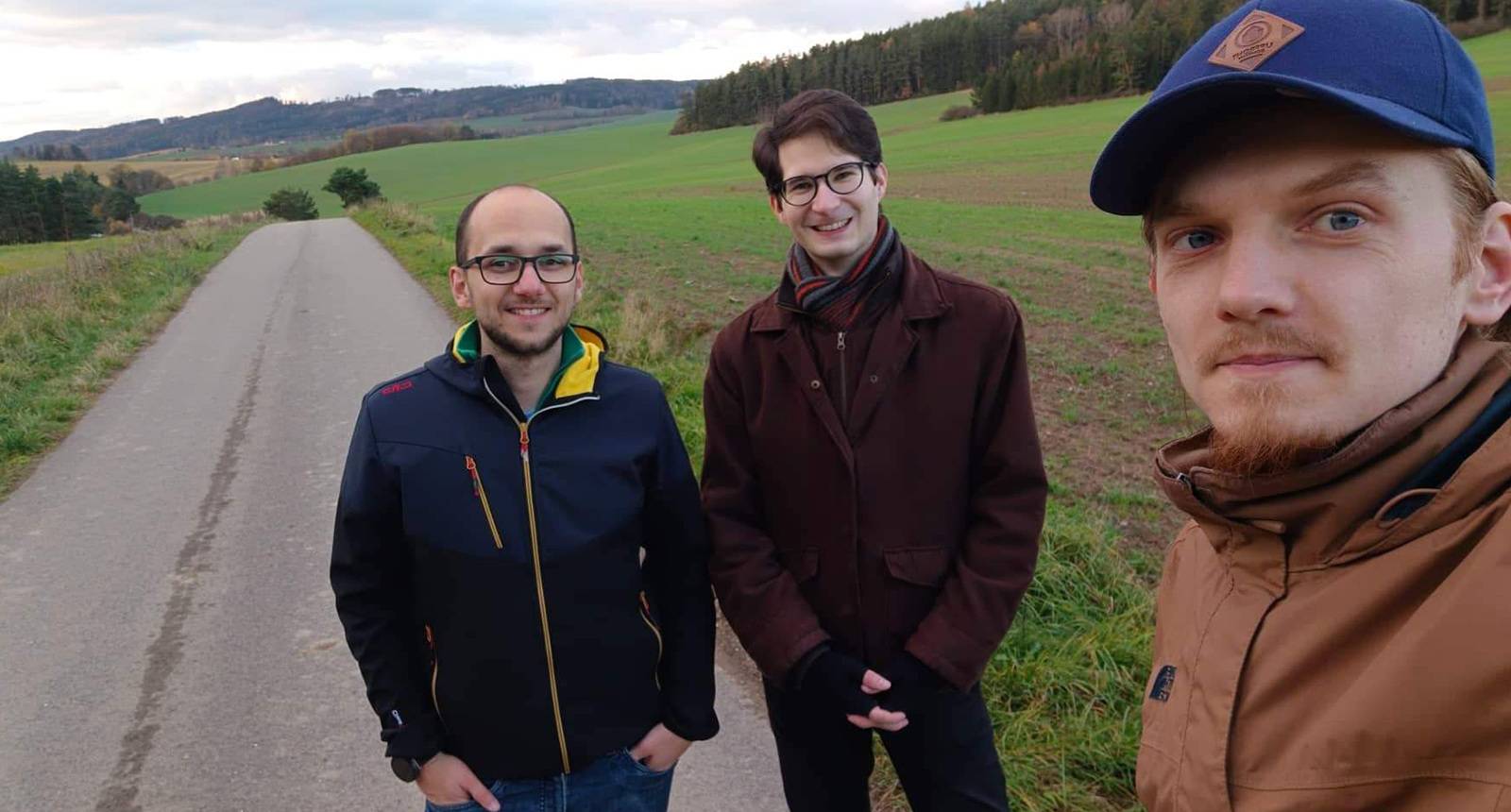
A historic moment, November 2022: Designers on a walk during Albi Weekend before settling to work together.
Petr: Playing games is a social thing. And I believe designing games could work as a collaborative effort as well. I believe it was me who pushed the idea of making something big and bold. Something I wouldn’t dare on my own. And yes, it tested our friendship a lot over the years.
Jindra: Sometimes there can be several good ideas, but ultimately, if one of us is responsible for preparing a new prototype, it is best if he has the final say on it. That was our golden rule. And if it doesn’t work that well, you will eventually find out and test the other idea too. There is no need to argue. I think this approach helped to sort out a few heated disputes. We usually ended up trying everything and then created a fourth variant anyway.
Michal: The first version came from Petr Vojtěch. It already contained the core idea that would stay with us throughout development: buildings were gradually added to the board, activating different types of workers, each with unique strengths and weaknesses depending on the district.
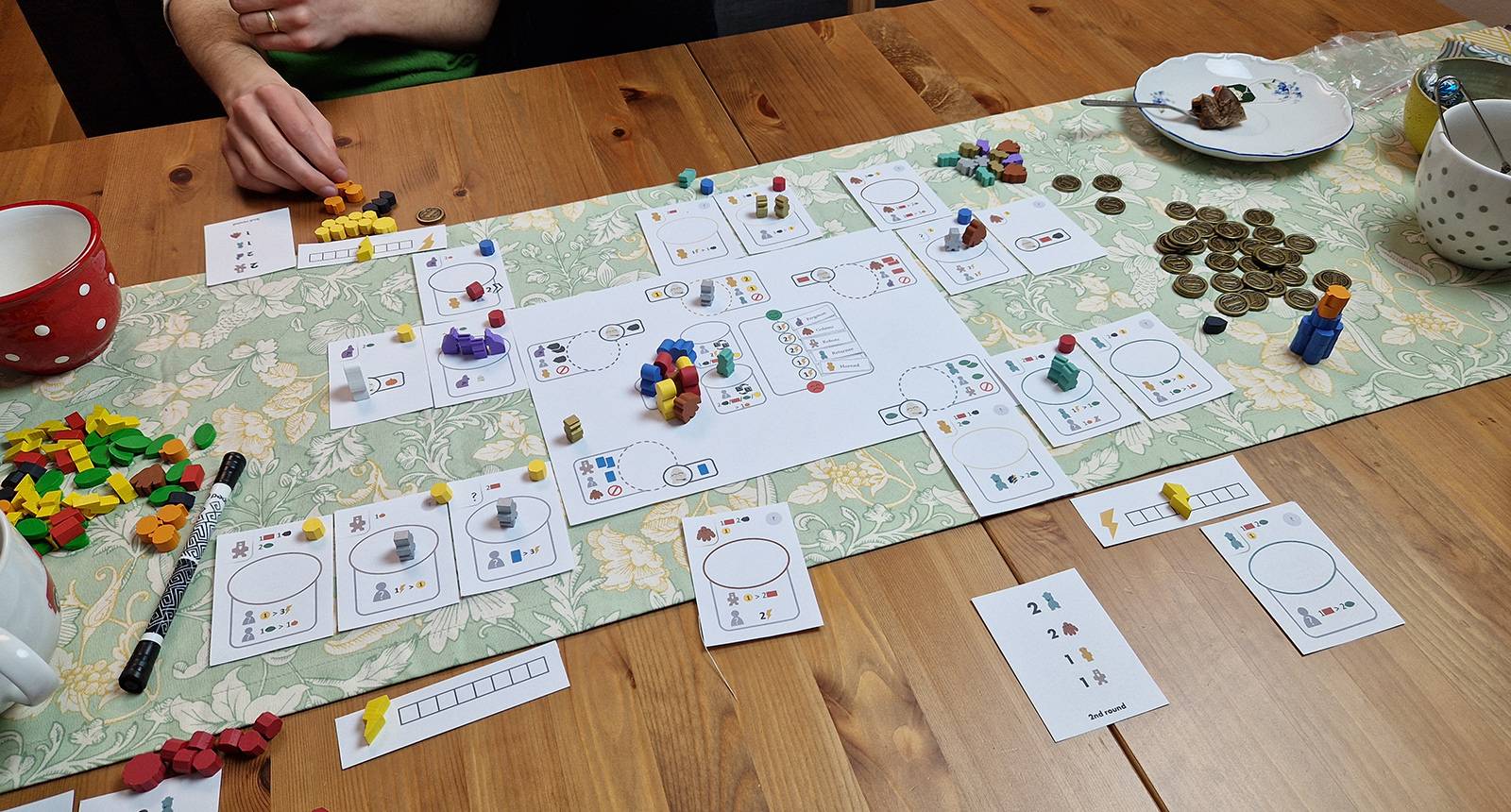
Prague Unseen - The very first prototype.
Jindra: 19th-century Prague was there from the inception. But for some, it was a medieval/renaissance game with alchemists and elements, because we were a bit too vague in saying “mythical fantasy Prague with folk creatures” and because the placeholder art was not era-specific. You could not really tell: “Oh, this quarter is a 19th-century Smíchov,” which you can now. And since we talked about golems, witches, and horneds without adding too much, we have learned, after testing the games for years, that some thought it would be set in the Prague of Rudolf II.
This was one of the reasons to replace permons (a mine-dwelling creature like a dwarf) in the final game with robots, which communicated a later era a bit more clearly. This addition still feels a bit off to some, because robots are not folk creatures. But they are heavily tied to the Czech origin, and they were actually in the prototypes as the fifth faction at the beginning anyway.
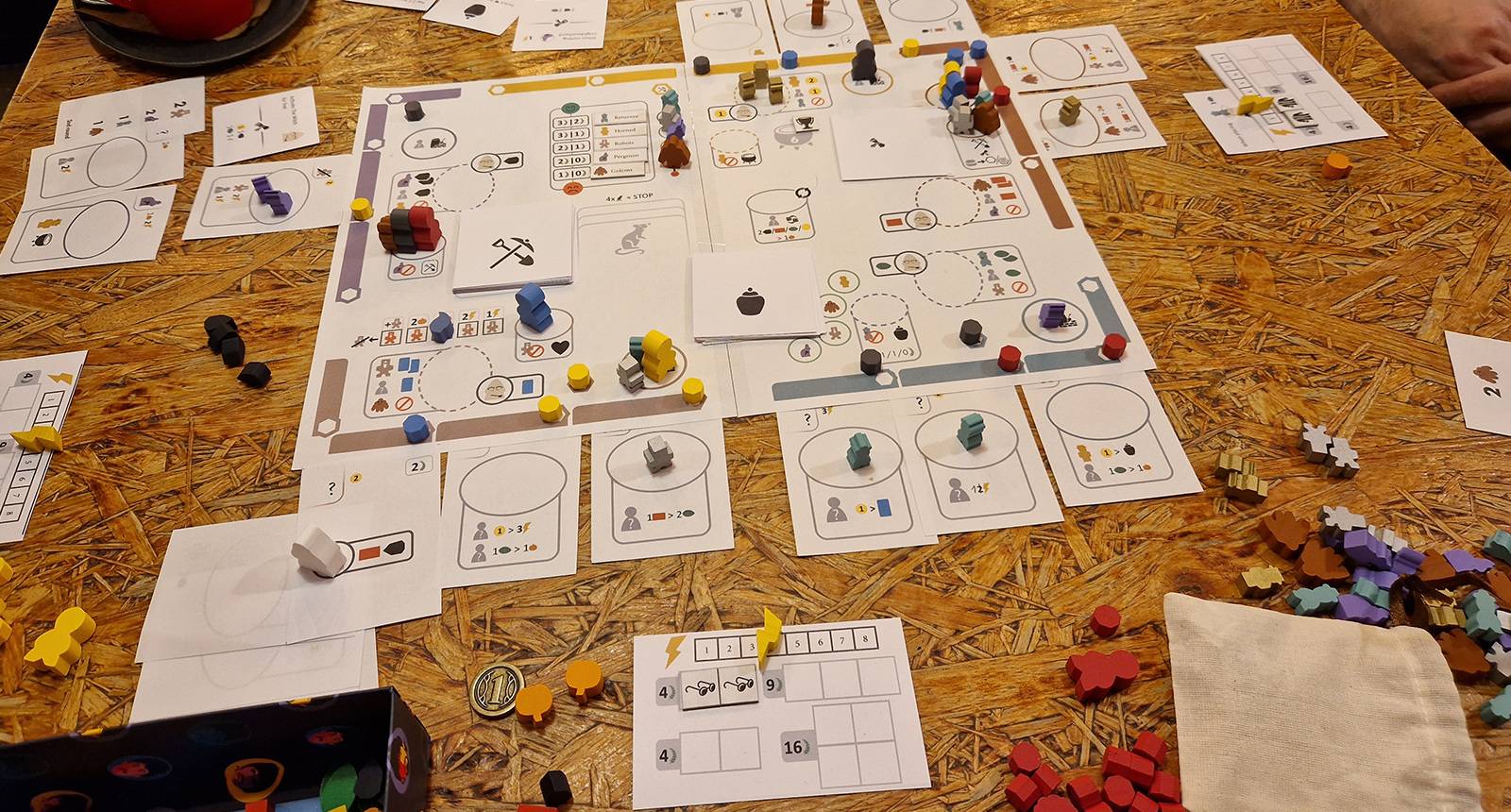
Another version was playtested at Bohemia Boards & Brews in Prague with more developed minigames.
Petr: We are using a huge part of our culture, but making it our own. And as Jindra mentioned, setting the game in the 19th century helped us find the unique twist. In the end, the gameplay helped shape the story as well
Michal: We were all living in Prague at the time; we knew the city well, and its legends and creatures were already deeply embedded in our cultural background. We are also all gamers who enjoy fantasy and stories, so the idea of making our own take on mythical Prague was immediately appealing.
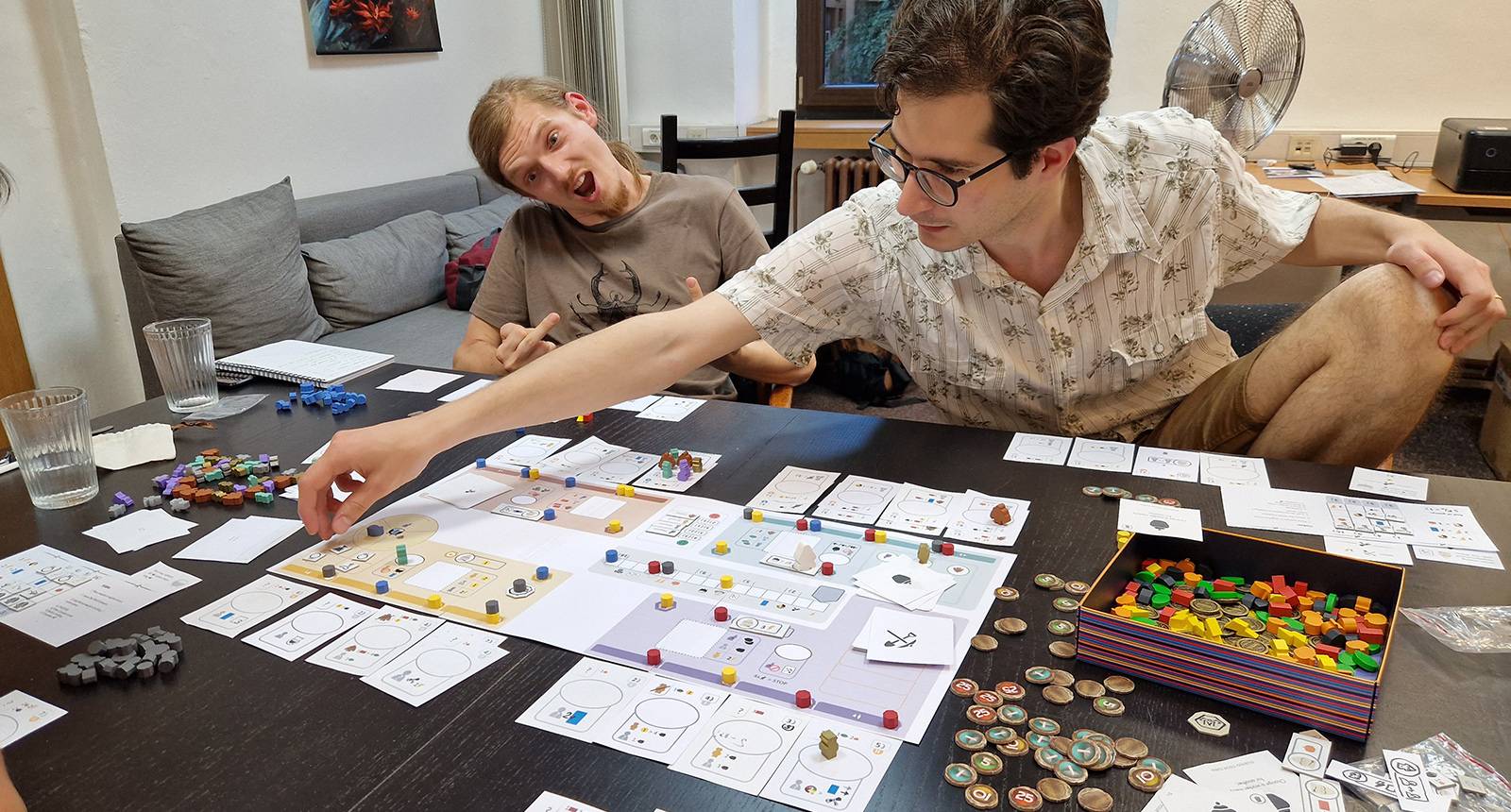
The early version. You might notice how little information there is compared to the final game.
Petr: There is a small regret I have: in the very first prototype, there was a card with a cobblestone street, and the idea was that the people are disappearing between the stones! I just loved the idea, but the card didn’t survive gameplay changes and iterations.
Authors: Michal Peichl, Petr Vojtěch, Jindřich Pavlásek Photo: Michal Peichl, Petr Vojtěch, Jindřich Pavlásek