
The Lights Went Out at the Zoo, and the Animals Escaped. Tomáš Holek Returns with a New Family Board Game!
Under the cover of night, some of the animals seized the opportunity to venture beyond their enclosures. But before the zoo comes back to life in the morning, they all need to find their way home. This charming premise forms the foundation of Night at the Zoo, the new family board game by Tomáš Holek, the acclaimed designer behind SETI: Search for Extraterrestrial Intelligence, Tea Garden, and Galileo Galilei.
- Games & Puzzles
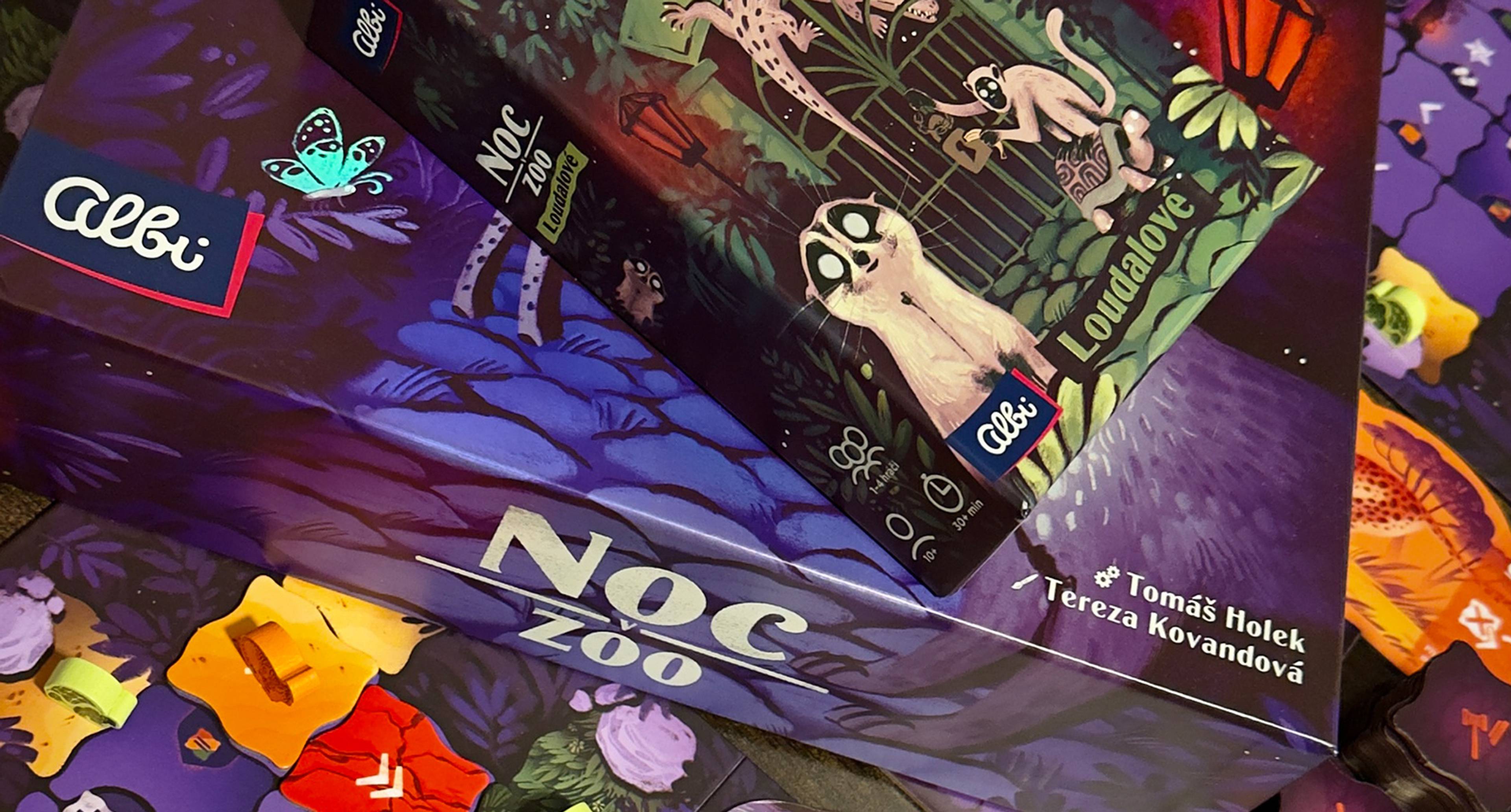
At first glance, Night at the Zoo immediately catches the eye with its playful artwork by Tereza Kovandová, perfectly capturing the atmosphere of a zoo after dark. The nighttime theme runs throughout the illustrations and even extends to the game box itself, which glows in the dark. But this is far more than an impressive production. Beneath its appealing presentation lies a cleverly designed family game that manages to extract surprising depth from a simple set of rules.
Planning Pays Off
At the heart of the game is selecting an action tile from a shared offer. But that's only the beginning of your decisions. Once you've chosen a tile, you can place it directly onto your player board, store it for later use, or discard it to trigger a special animal movement. Success depends not only on which tile you choose, but also on when and how you decide to use it.
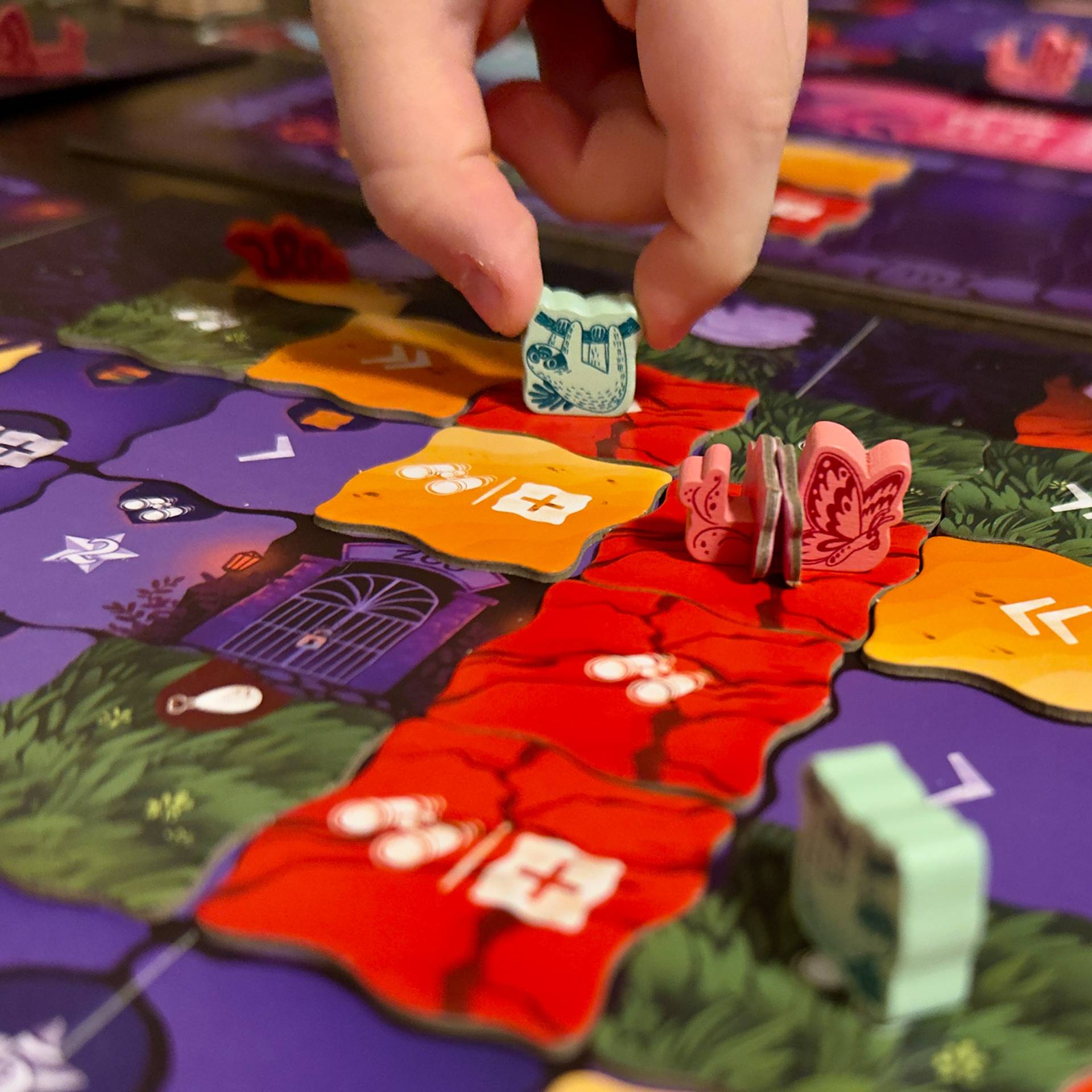
If you choose to place a tile, its position on your board becomes just as important. Every tile extends the path that animals use to return to the zoo while simultaneously activating actions. Clever placement allows you to combine the effect of the tile itself with the effect of the space it covers, enabling a single move to accomplish much more than it first appears.
This is where the game's most interesting dilemmas emerge. Should you use a tile immediately because it helps your current situation? Save it for a later turn when it fits your strategy better? Or give up its action entirely and discard it to move animals standing on the matching terrain? What initially seems like a straightforward choice of a single tile can end up influencing several turns to come.
Every Animal Plays by Its Own Rules
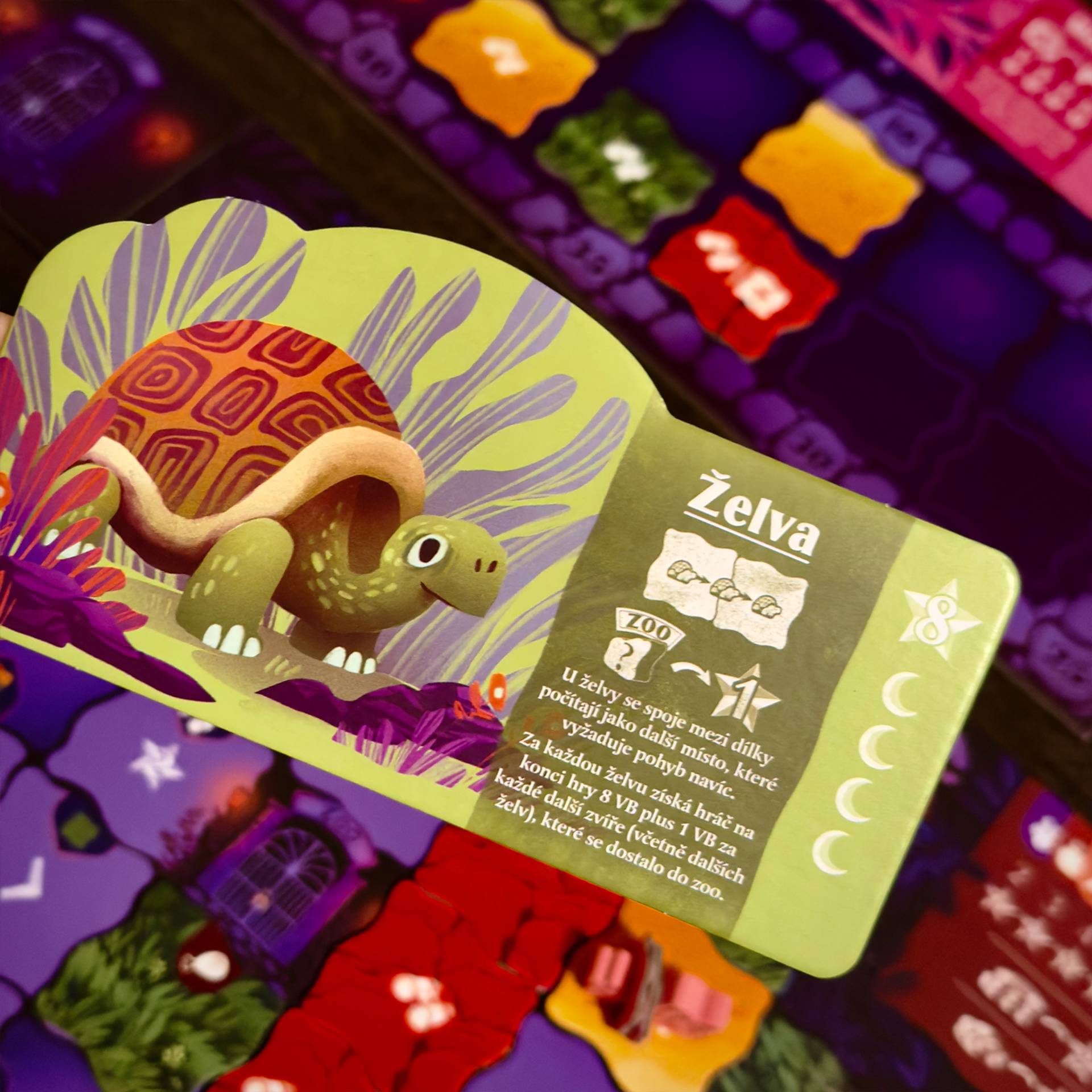
One of the game's most engaging features is that every animal moves differently. Penguins slide to the furthest possible space, cheetahs gain an extra step during their special movement, and snakes always move in the direction they are facing. Sloths alternate between sleeping and moving, while butterflies collect pollen tokens.
The differences don't stop there. Every species also has its own unique scoring conditions. Butterflies score based on the amount of pollen they've collected, while wolves earn points depending on how many members of the pack make it safely back to the zoo. Each animal introduces its own rule that players must take into account throughout the game.
These unique abilities significantly influence how you approach each playthrough. Some animals require careful planning several turns ahead, while others force you to adapt your strategy around their distinctive movement patterns. As a result, every species presents a different puzzle and encourages you to think about returning them to the zoo in a completely different way.
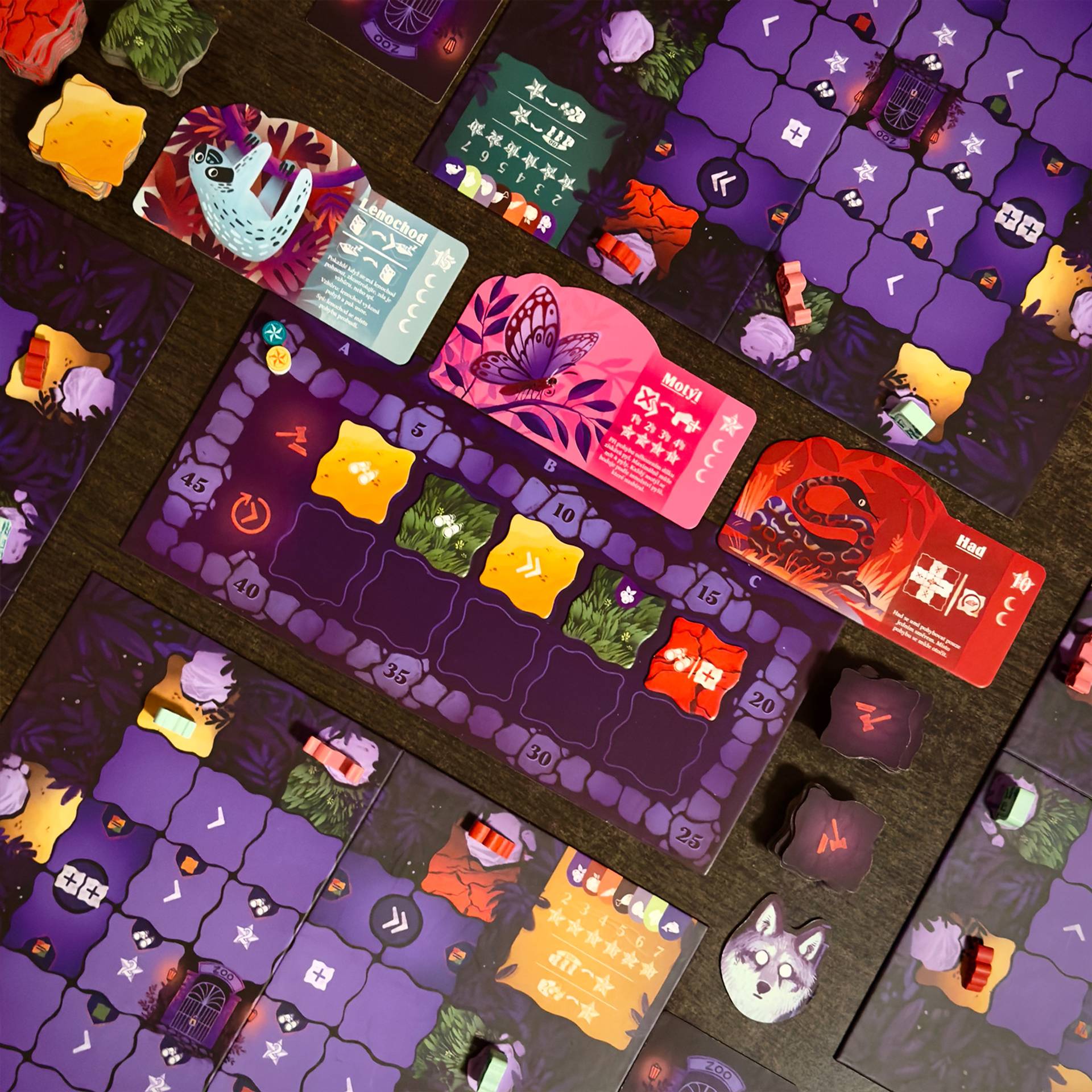
Each game features only three animal species
The Better You Know It, the More It Offers
Every Animal Plays by Its Own Rules
Three Animals, Countless Possibilities
Each game features only three animal species, and their particular combination has a major impact on how the game unfolds. One session might revolve around carefully planning the snake's route, while another focuses on managing the sloth's alternating movement and rest.
Even more variety comes with the Latecomers expansion, which introduces four additional animal species. These can be mixed with the animals from the base game, dramatically increasing the number of possible combinations and ensuring every playthrough feels different.
The order of the action tiles changes from game to game as well, meaning that even the same trio of animals won't necessarily lead to a familiar experience. Instead of relying on a single winning strategy, players must constantly evaluate the current state of the board and adjust their plans accordingly.
The Better You Know It, the More It Offers
Tomáš Holek has created a family game whose rules are easy to grasp during your very first play, yet whose strategic possibilities continue to reveal themselves over time. At first, your attention is focused simply on getting the animals safely back to the zoo. As you become more familiar with the game, however, you'll begin spotting deeper connections, planning several moves ahead, and discovering new ways to squeeze the maximum value out of every turn.
And that's where Night at the Zoo truly shines. The better you know the game, the more fascinating the decisions become. The rules never change—what changes is how much you learn to see within them.
Text by Michaela Kučerová / Photos by Albi