
"Night at the Zoo came about because I pinched a nerve," says its designer Tomáš Holek
Night at the Zoo is a clever and beautiful-looking new family game from Albi, in which players try to get nine animals of three different species back to the zoo after they have ventured out on a nighttime adventure. With its simple rules and fast-paced turns, yet plenty of room for thoughtful decisions, the game might never have come into existence if its designer, highly successful board game creator Tomáš Holek (SETI, Kingdom Come, Tea Garden), hadn’t suffered a neck injury. How did that happen? You can find out in the following lines – in a designer’s diary written especially for you.
- Behind the Board
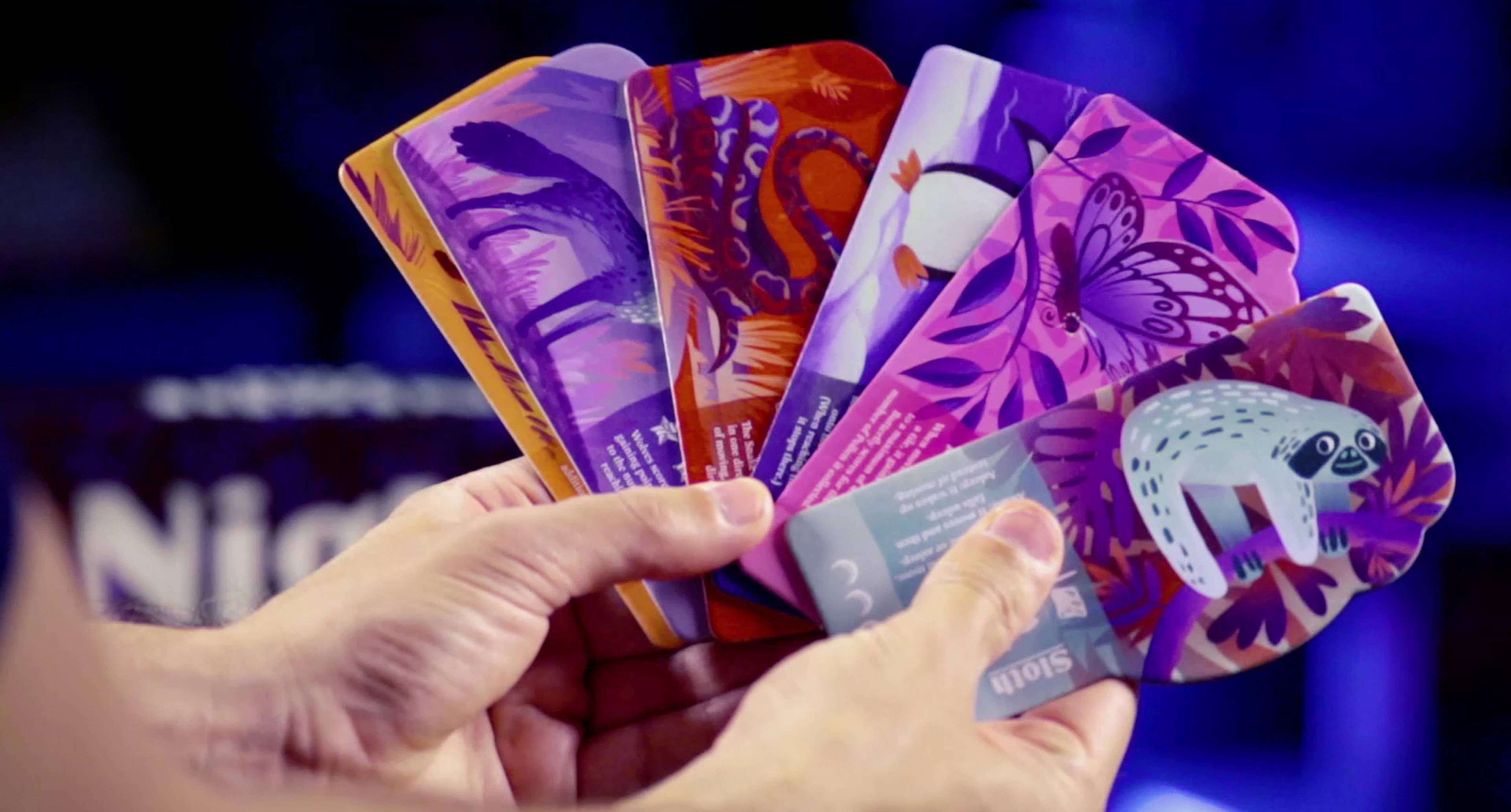
It seems that injuries have accompanied me throughout my career as a board game designer. A lingering knee injury from playing football led me to start focusing on board games full-time. I couldn’t walk properly for quite some time and was bored at home. I had a few ideas for games, so I started working on them intensively, and that’s essentially how I became a designer.
At the beginning of the design process for Night at the Zoo, I once again spent three weeks at home, this time because of a pinched nerve in my neck. All I could do was lie down, so I entertained myself by coming up with a game mechanism in which a herding dog would drive sheep from the pasture back home. Admittedly, during my long recovery it became clear that the original mechanism didn’t really work, but I managed to come up with another one, already much closer to the one you know from the final game.
SHEEP IN PENGUIN’S CLOTHING
I had my neck injury shortly before Spiel 2022 (the world’s largest board game fair, held in Essen, Germany – editor’s note), and over the following few weeks I developed a prototype that I went to present to Albi. Albi didn’t hesitate for long and signed the game, along with Tea Garden, which was also still in development at the time. Back then, it was still about sheep that players tried to move to the center of the player board using drafted tiles. The principle behind triggering actions was the same as in the final version of Night at the Zoo: by placing an action tile or covering one up. The goal was to get as many of your sheep home as possible, but all the sheep moved and scored in the same way.
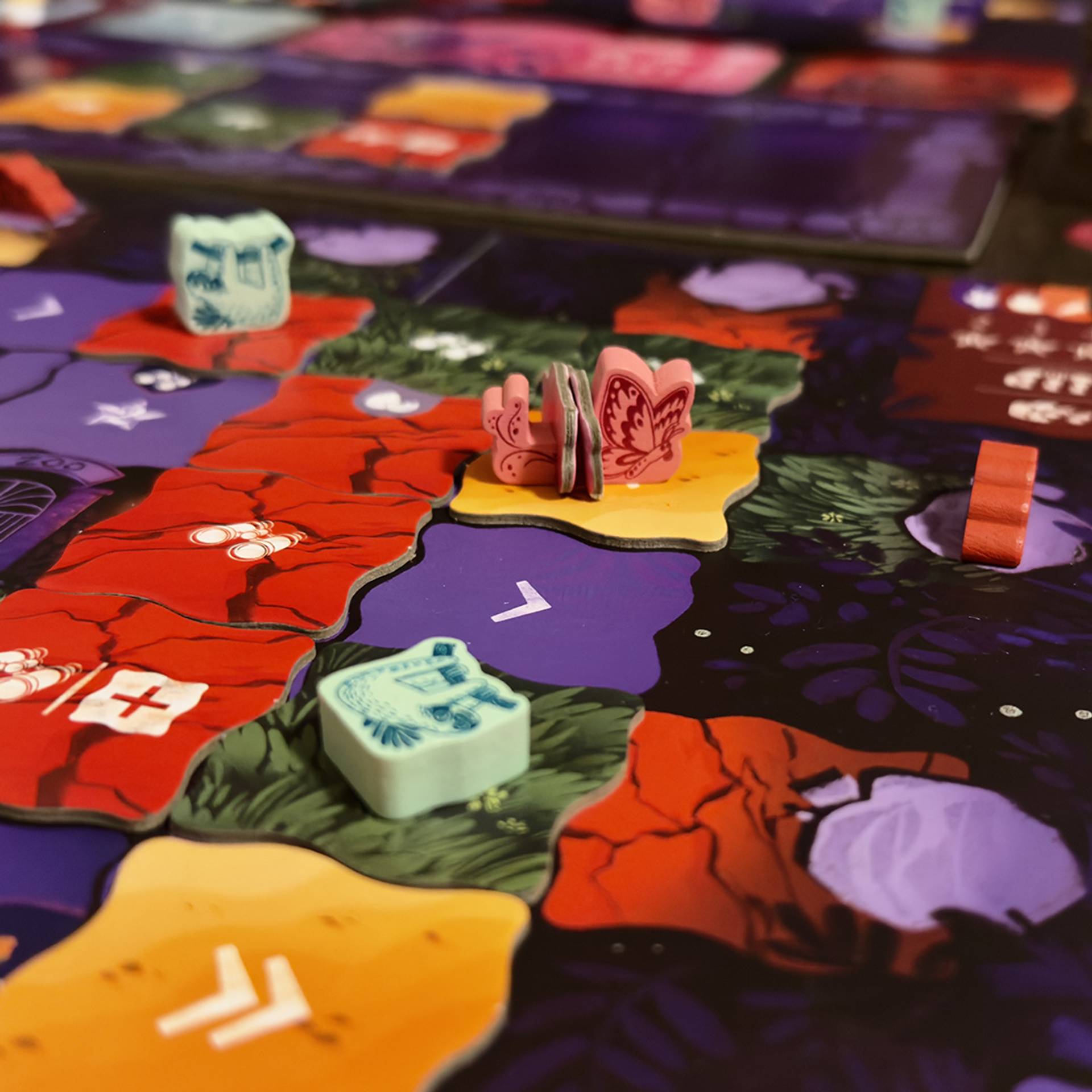
Final version of the board game
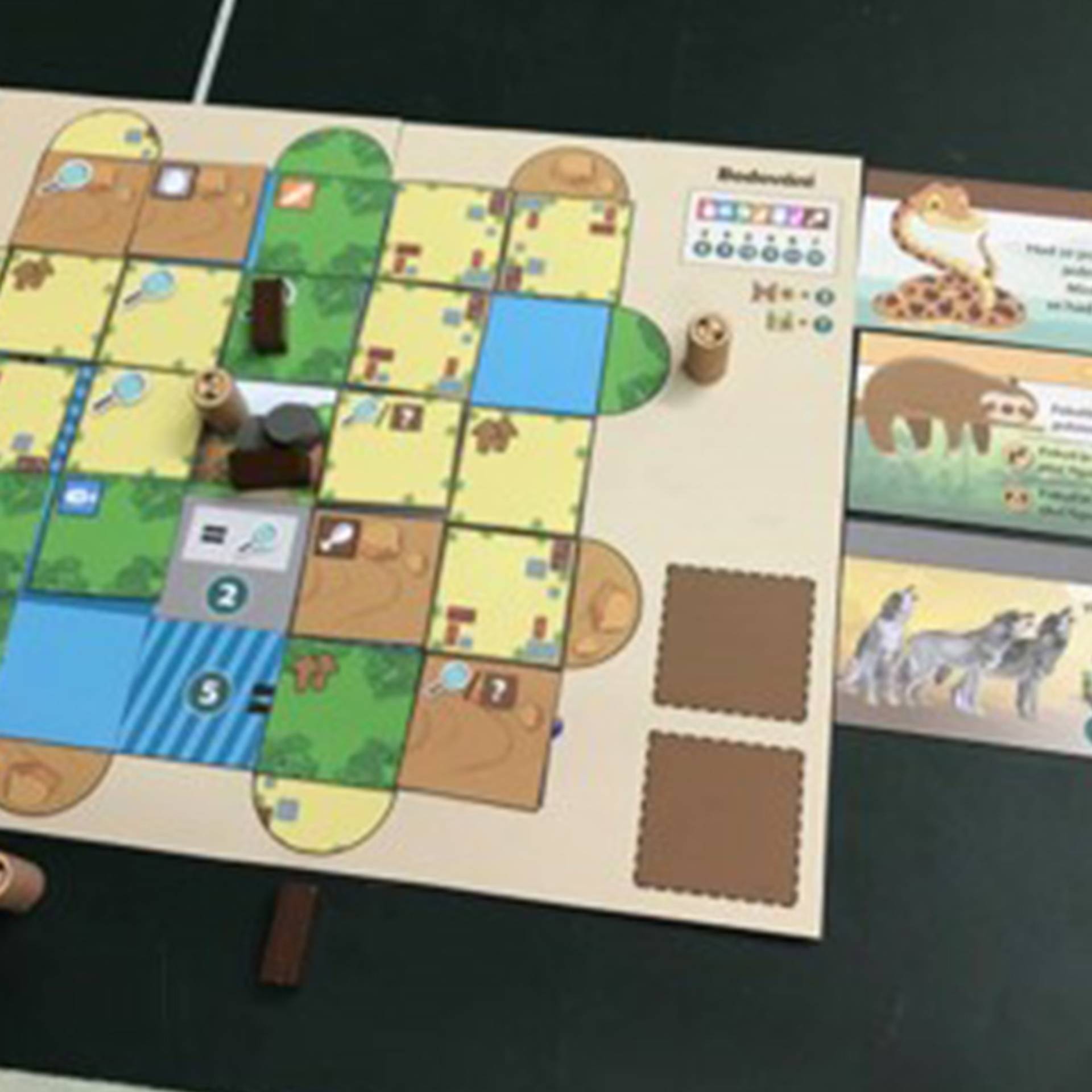
First prototype of the game
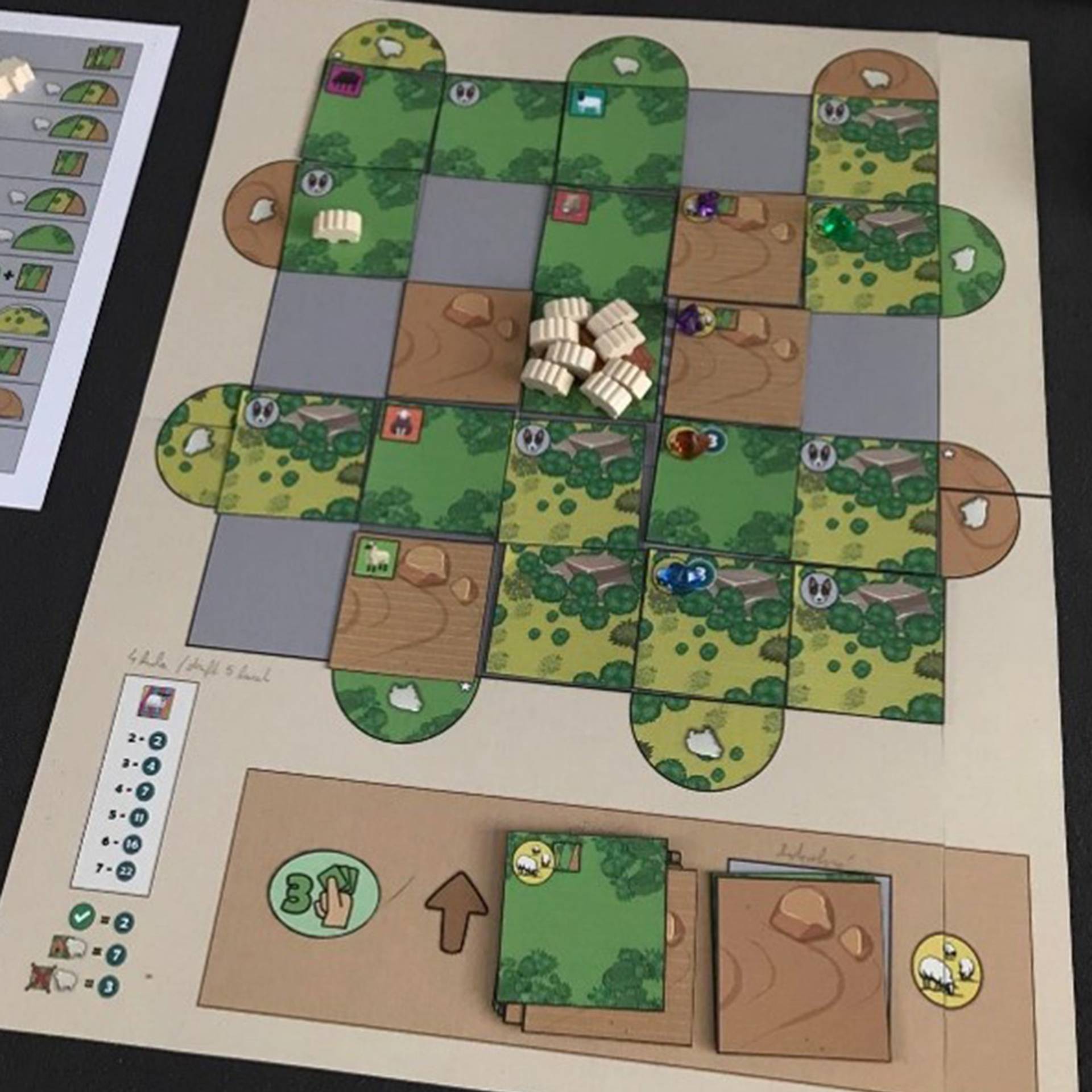
Second prototype of Night at the Zoo
During development, two major changes were made. Instead of sheep, we decided to use animals returning to the zoo. This brought considerably more variety and asymmetry into the game. I enjoyed designing mechanisms that would somehow capture the characteristics of the individual animals. I would always decide what animal I wanted in the game first, and only then think about what mechanism could govern its movement. For example, I really enjoyed designing the penguin, which hurtles across the board on its belly, even though I know it can be quite tricky to deal with. Or the crocodile, which can be pretty dangerous. The most challenging animal from a game-mechanical perspective was the monkey. We changed the principle behind its movement several times before we were finally happy with it.
AN EXTRA MOVE WITH EXTRA HELP
Another change was the addition of a bonus movement at the end of every fifth round. The idea came from my friend Petr Vojtěch, who is also a board game designer (including Prague Unseen and Karak: Labyrinth). Adding a round with a bonus movement introduced another layer of planning that players have to take into account during their turns, because it allows you to move several animals at once. Its importance therefore definitely cannot be ignored.
Other than that, it has to be said that the game’s development was relatively straightforward, without any major twists and turns. The principles I came up with during that aforementioned recovery period are still at the heart of the game today. And judging by the reactions from players, I have to say that the simplicity of the core idea seems to be one of the things they like most about the game.
Text by Tomáš Holek / Photos by Tomáš Holek